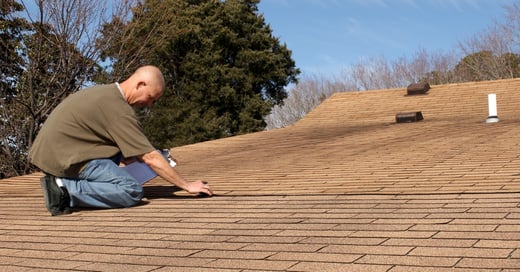
Winter in Central Indiana brings freeze-thaw cycles, heavy snowfall, and ice dams—conditions that put immense pressure on commercial flat and low-slope roofing systems. Minor defects left unchecked in the fall quickly turn into severe structural leaks, costly inventory damage, or unexpected business shutdowns by January.
If you manage a commercial facility, warehouse, or retail space in Indianapolis, Lebanon, Zionsville, or surrounding areas, look out for these 5 critical warning signs that your commercial roof needs attention before cold weather sets in.
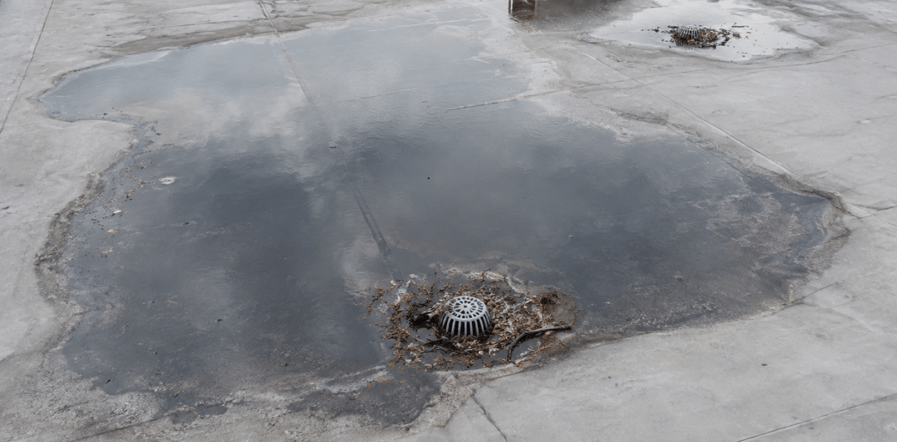
Flat roofs are engineered to drain standing water within 48 hours following rain. If standing water remains long after storms clear, your drainage pathways are compromised or structural sagging is occurring.
When winter hits, ponding water freezes, expands, and exerts massive force on the roofing membrane. Repeated freeze-thaw cycles tear open seams and compromise flashing.
Severe drainage issues often stem from clogged or damaged commercial gutter systems. Learn how our Commercial Gutter Installation Services keep water flowing safely off your building year-round.
2. Blistering, Bubbling, or Split Single-Ply Membranes Damage
Blisters or bubbles under TPO, EPDM, or PVC membranes indicate trapped moisture or air underneath the material. As ambient temperatures drop below freezing, trapped moisture expands rapidly, splitting the membrane open and exposing the building envelope directly to snowfall and ice.
Review guidelines on moisture intrusion and insulation decay from the National Roofing Contractors Association (NRCA) to understand how subsurface moisture compromises commercial R-value.
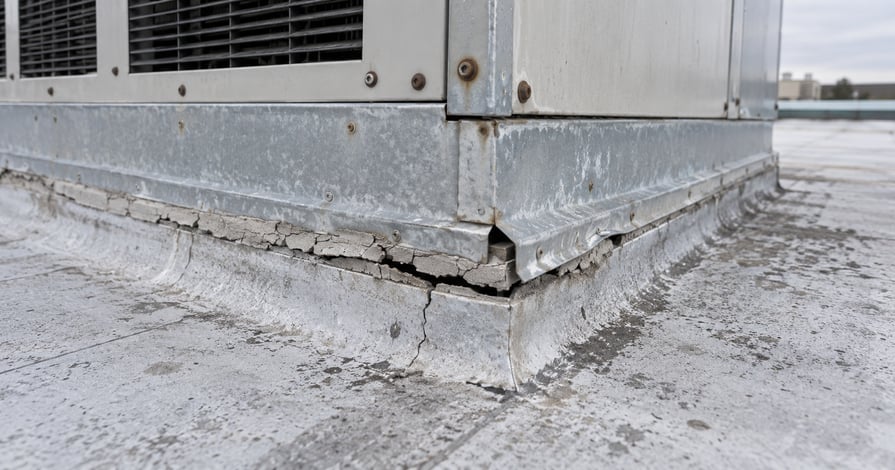
3. Damaged or Deteriorating Flashing Around HVAC Units and Penetrations
Flashing seals critical roof junctures—around HVAC units, vents, skylights, and parapet walls. Because different building materials expand and contract at different rates during cold snaps, aged flashing pulls away, leaving exposed gaps.
If your facility was hit by severe hail or high winds earlier in the season, review our guide to Storm Restoration & Insurance Claims Support to ensure all flashing and wind-uplift damage is properly documented before filing a claim.
4. Interior Ceiling Stains, Mold Odors, or Blistered Drywall
By the time water stains appear on interior drop-ceiling tiles or walls, water has already penetrated the exterior membrane, saturated the underlying insulation board, and traveled through the deck.
The Occupational Safety and Health Administration (OSHA) outlines indoor air quality and mold hazards that can arise when commercial roof leaks remain unaddressed in occupied commercial spaces.
5. Clogged or Damaged Internal Drains and Scuppers
Autumn leaves, gravel, and debris routinely clog commercial scuppers, interior drains, and downspouts. When winter snow melts during midday thaws and cannot drain, it re-freezes overnight at the roof perimeter, creating ice dams that backup water under roof laps.
Don't wait for emergency winter leaks to disrupt operations. Schedule a comprehensive inspection through our Commercial Roofing Services to safeguard your investment ahead of winter.
Protect Your Facility Before the First Freeze
Preventative repairs made during the fall cost a fraction of emergency winter calls. Inspecting roof drains, sealing membrane seams, and repairing loose flashing now ensures your building stays dry and operational all winter long.
Contact the commercial team at Kavlan Contracting today to schedule an on-site commercial roof evaluation!