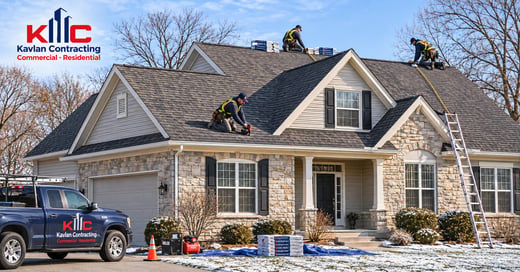
Proper attic ventilation helps control moisture and keep the underside of your roof closer to the outdoor temperature during winter. Combined with air sealing and insulation, it can reduce the risk of ice dams, condensation, mold, wet insulation, and damage to roof decking.
Here are five reasons attic ventilation matters during Central Indiana’s coldest months.
1. It Helps Reduce the Risk of Ice Dams
Ice dams form when heat escaping into the attic warms part of the roof. Snow melts on the warmer surface, flows toward the colder roof edge, and refreezes. Over time, a ridge of ice can form along the eaves and prevent additional meltwater from draining.
That water may then back up beneath the shingles and enter the roof system, potentially damaging:
- Roof decking
- Attic insulation
- Ceilings and walls
- Fascia and soffits
- Gutters
Ventilation helps keep the roof deck cooler and reduces uneven snowmelt. However, ventilation works best when the attic floor is also properly air-sealed and insulated.
ENERGY STAR’s attic ventilation guidance explains that this combination limits the movement of heat and moist indoor air into the attic while allowing outdoor air to circulate.
Kavlan’s guide to how Indiana weather affects your roof provides a closer look at the effects of snow, ice, and repeated freeze-thaw cycles.
2. It Allows Moisture to Escape
Warm indoor air contains moisture from everyday activities such as:
- Cooking
- Showering
- Washing clothes
- Running a humidifier
- Normal breathing
When warm, moist air enters a cold attic, it can condense on the underside of the roof deck, nails, rafters, and other surfaces. This may create frost during very cold weather. When temperatures rise, that frost can melt and make the attic wet even when the roof is not leaking.
Continued moisture can contribute to mold, mildew, wood rot, staining, and damaged insulation. Proper ventilation provides a path for moisture to leave the attic before it collects on cold surfaces.
Bathroom fans, kitchen exhaust fans, and clothes dryers should also vent outdoors rather than into the attic. Ventilation cannot overcome a major moisture source that continuously releases warm, humid air into the space.
3. It Helps Insulation Perform Properly
Insulation is most effective when it remains dry. When attic insulation becomes damp or compressed, it may not resist heat transfer as effectively.
This can create a cycle in which more heat escapes from the living space, the roof warms unevenly, and the risk of snowmelt and ice dams increases.
The current Indiana Weatherization Field Guide recommends repairing roof leaks, sealing attic air leaks, venting household exhaust outdoors, and keeping eave ventilation pathways open before adding insulation.
Homeowners should avoid covering soffit vents with insulation. Rafter vents or baffles can preserve a clear path for air to move from the soffits toward higher exhaust vents.
4. Balanced Airflow Protects the Roof System
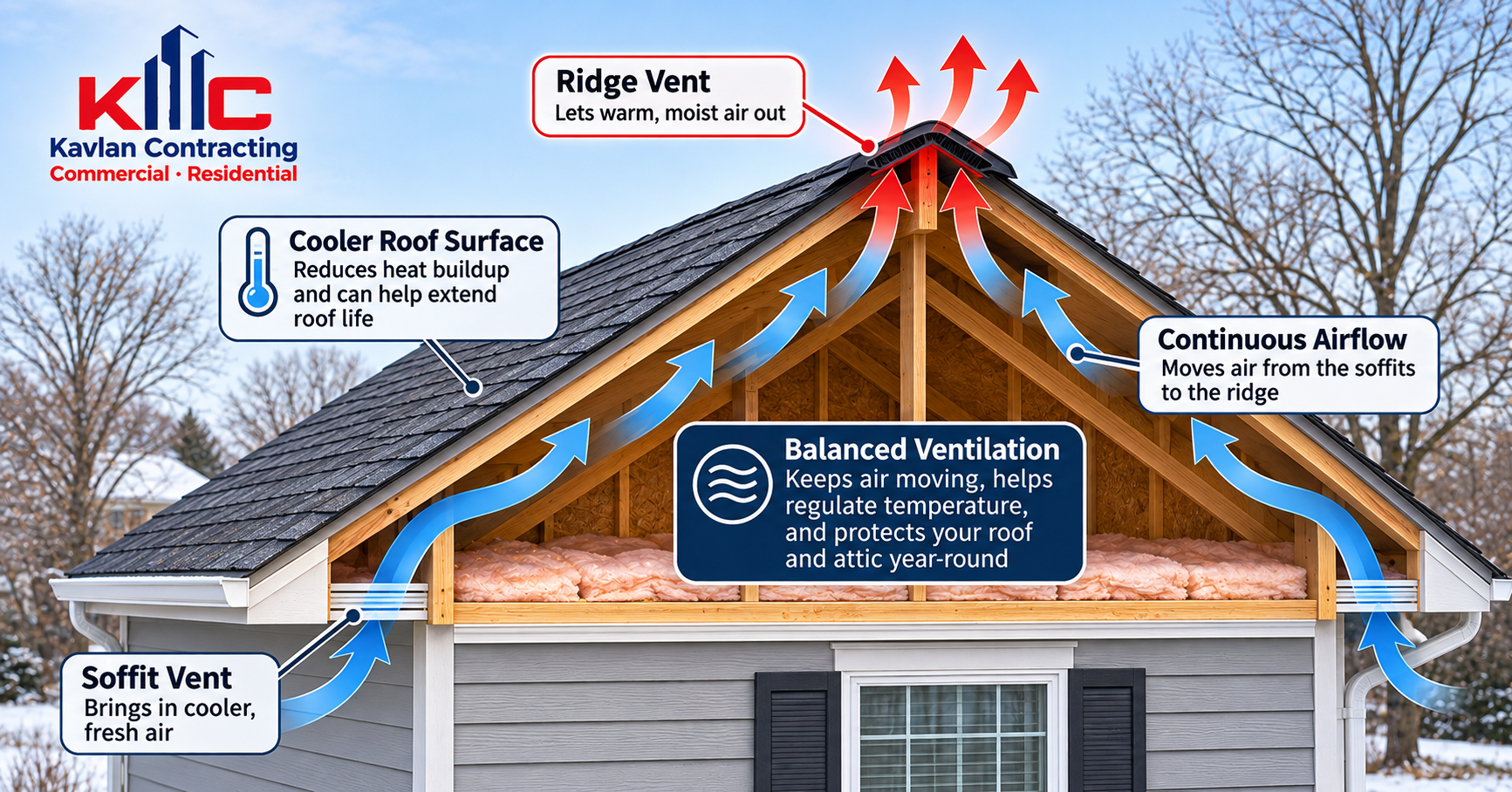
Effective ventilation usually requires both intake and exhaust.
Intake vents, commonly located in the soffits, allow outdoor air to enter near the lower edge of the roof.
Exhaust vents, such as ridge or roof vents, allow air to leave near the top.
Adding more exhaust ventilation without sufficient intake does not necessarily solve the problem. Blocked soffits, damaged vents, poor insulation placement, or an unbalanced design can limit airflow.
Every roof and attic is different. Roof shape, attic size, insulation, existing vents, and local building requirements all affect the appropriate ventilation design.
Kavlan’s article about hidden damage caused by roofing details explains how ventilation, insulation, flashing, and moisture control work together as parts of the complete roofing system.
5. Warning Signs May Appear Inside or Outside
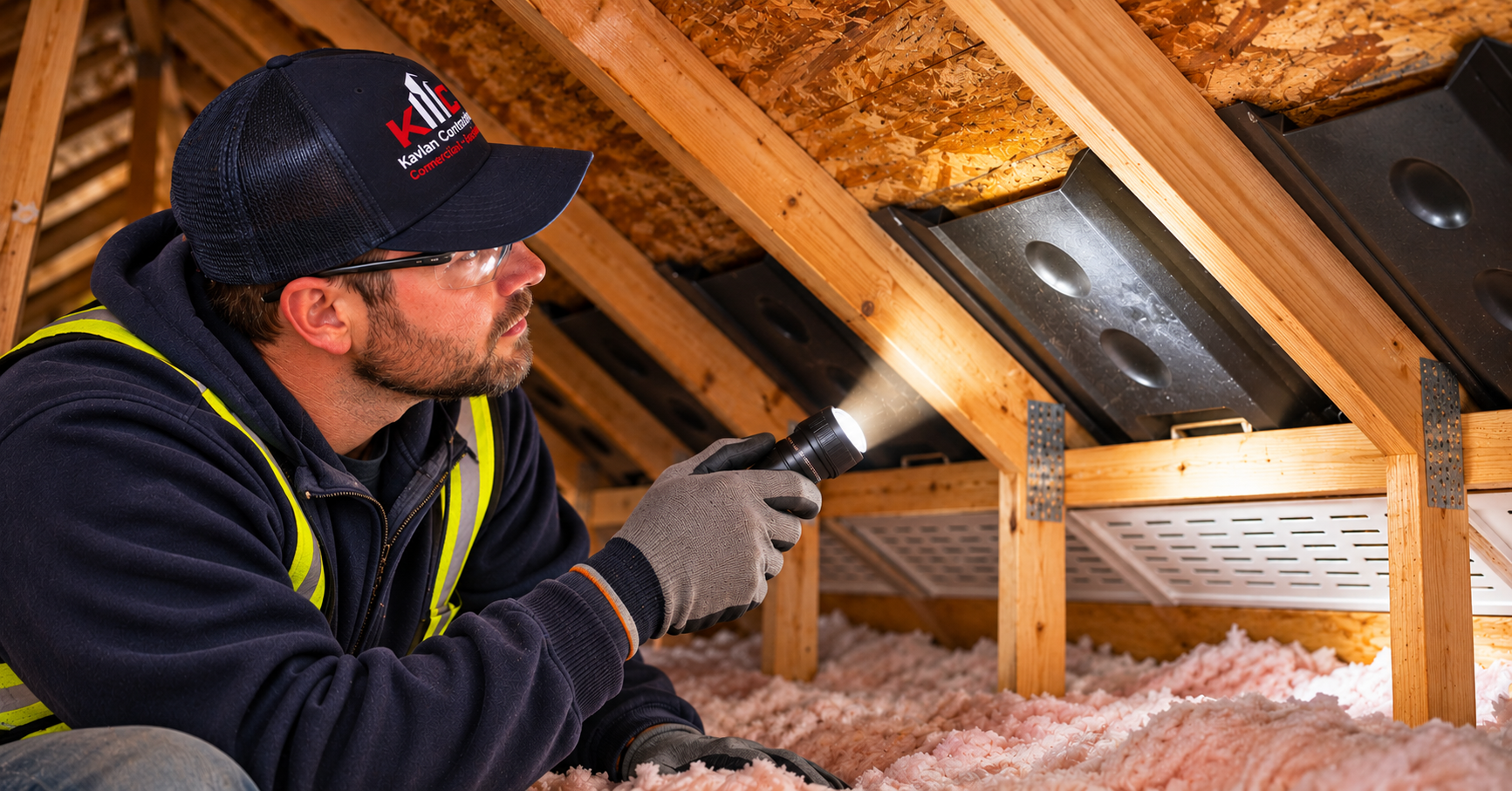
Attic ventilation problems are not always obvious. Some warning signs include:
- Frost on nails or roof decking
- Damp or flattened insulation
- Mold or musty odors
- Dark stains on rafters or sheathing
- Rusted nails or metal fasteners
- Icicles or ice buildup along the roof edge
- Uneven snowmelt across the roof
- Peeling paint near ceilings or exterior soffits
- Rooms that are difficult to keep comfortable
These symptoms can have multiple causes, including roof leaks, poor air sealing, inadequate insulation, or improperly vented exhaust fans. An inspection can help identify the actual source before repairs are recommended.
Frequently Asked Questions
Does attic ventilation make a house colder?
Proper attic ventilation is not intended to cool the living space. Insulation and air sealing separate the conditioned rooms from the attic, while ventilation helps manage temperature and moisture above them.
Can attic ventilation prevent every ice dam?
No. Ice dams can be influenced by air leaks, insulation gaps, roof design, weather, and sun exposure. Ventilation is one part of a complete prevention strategy.
Should soffit vents be covered during winter?
Generally, no. Covering soffit vents can interrupt airflow and trap moisture. Vents should remain clear unless a qualified professional has designed the attic differently.
Can adding more roof vents solve a moisture problem?
Not always. More vents will not correct roof leaks, bathroom fans exhausting into the attic, or major air leaks from the home. The entire attic system should be evaluated.
Protect Your Roof From the Inside Out
Attic ventilation may not be visible from the street, but it plays an important role in the performance of your roof during an Indiana winter.
Balanced airflow, proper insulation, and air sealing work together to control heat and moisture. Addressing problems early can help prevent ice dams, damaged insulation, mold, and premature deterioration of the roof deck.
Kavlan Contracting provides residential roofing inspections and services throughout Central Indiana.
Contact Kavlan Contracting to schedule a free inspection and learn whether your roof and attic are prepared for winter.