As a commercial property owner or facility manager in Central Indiana, your building’s roof is one of your most critical assets. Whether you manage an industrial warehouse in Lebanon, a retail center in Carmel or Zionsville, or an office park in Indianapolis, budgeting for a commercial roof replacement or major overhaul can feel overwhelming.
Because commercial roofing systems range wildly in material, size, and complexity, installation costs can vary from a few dollars to well over $15 per square foot. To help you plan accurately and avoid surprise capital expenses, here are the 5 major factors that impact the cost of budgeting for a commercial roof in our local market.
1. Roofing System Material and Substrate
The primary membrane you select forms the baseline of your financial plan:
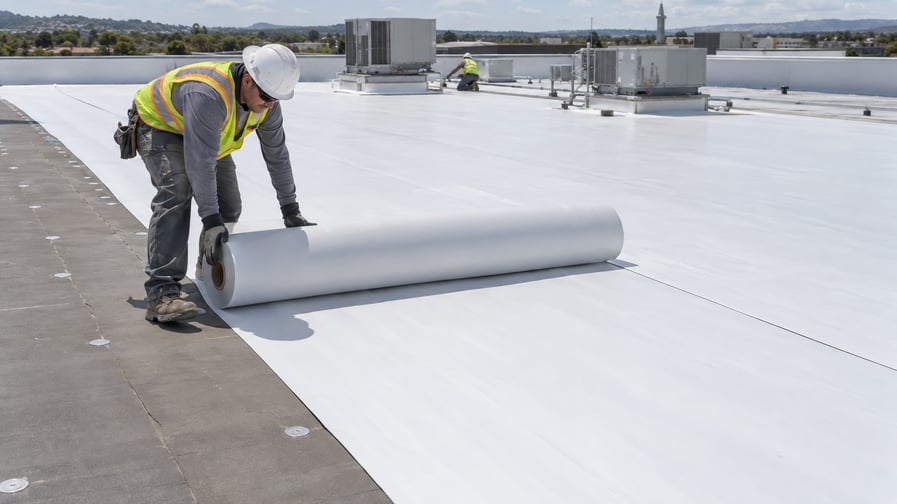
- TPO (Thermoplastic Polyolefin): Highly reflective white membrane that reduces cooling demands during humid Midwest summers. It is one of the most cost-effective and popular choices for commercial flat roofs.
- EPDM (Ethylene Propylene Diene Monomer): Durable black rubber roofing known for excellent longevity and resistance to Central Indiana's winter freeze-thaw cycles.
- PVC: Ideal for restaurants or manufacturing plants due to its high chemical, grease, and fire resistance, though it carries a higher upfront material cost.
- Metal Roofing: Offers superior wind resistance and longevity for slope-roofed commercial facilities, representing a higher upfront capital investment with minimal lifecycle maintenance.
2. Roof Tear-Off vs. Overlay Options
Building code regulations dictate how many roof layers your commercial structure can carry:
- Overlay (Re-Roofing): If your current roof has only one layer and the underlying insulation board is dry, you may be able to install a new membrane directly over the old one. This saves thousands in labor and landfill disposal fees.
- Complete Tear-Off: If moisture testing reveals saturated insulation board or if two roofing layers are already present, building codes require a complete tear-off down to the deck.
Proper exterior drainage plays a huge role in preventing moisture buildup under single-ply membranes. Pair your roofing strategy with our Commercial Gutter Installation Services to keep water moving off your building envelope.
3. Insulation Thickness and Energy Code R-Value Requirements
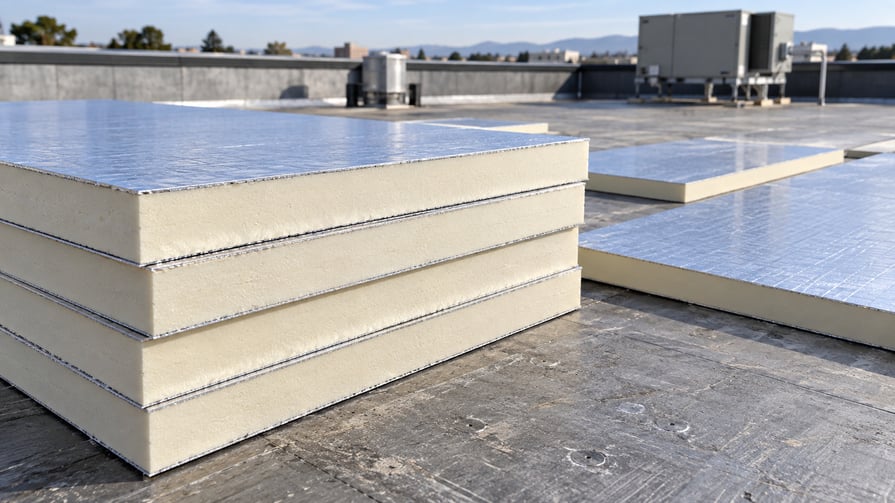
Energy codes across Indiana require specific thermal resistance (R-value) targets for commercial roof replacements. Achieving the required R-value often requires installing thicker layers of Polyiso (polyisocyanurate) insulation board:
- Upfront Material Impact: Increasing insulation thickness adds to material expense, but significantly lowers winter heating and summer cooling utility bills for large facilities.
- Code Compliance: Meeting current guidelines outlined by the U.S. Department of Energy's Building Energy Codes Program ensures your building remains fully compliant and energy-efficient.
4. Severe Weather and Storm Damage Coverage
Central Indiana experiences heavy spring hail, high wind events, and severe seasonal storms that can damage commercial roof decks, flashing, and mechanical caps.
- CapEx vs. Insurance Claims: If roof replacement is required due to un-deferred storm damage, a portion of the project cost may be covered under your commercial property insurance policy.
- Accurate Documentation: Working with a contractor skilled in commercial storm assessments ensures that all hail impacts, seam separations, and wind uplift are accounted for in the claim scope.
If recent severe weather impacted your commercial property, learn how our team helps document damage through our Storm Restoration & Insurance Claims Support services. To understand post-storm building assessment standards, consult the guidelines provided by the National Storm Damage Center.
5. Parapet Walls, Penetrations, and Mechanical Equipment Access
The shape and density of your roof deck heavily influence labor costs:
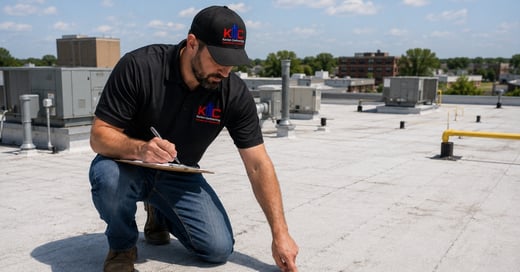
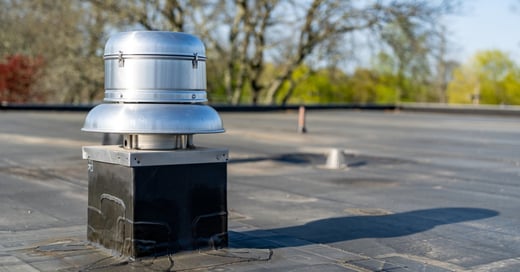
- Penetrations: Roofs with numerous HVAC units, skylights, exhaust vents, and drain lines require intricate hand-flashing work that increases labor hours.
- Staging & Access: Multi-story buildings or downtown properties in urban centers require specialized crane setups, street permits, and safety rigging, which must be factored into your estimate.
Proactive maintenance extends the life of your commercial investment and delays major capital replacements. Learn more about our long-term repair and replacement solutions on our Commercial Roofing Services Page.
Plan Your Commercial Roof Budget with Confidence
Commercial roof replacement is a major investment, but proactive budgeting prevents emergency downtime and costly interior building repairs. By evaluating material performance, insulation requirements, and existing deck conditions early, you can structure a clear financial path forward.
Ready to schedule a professional commercial roof evaluation for your Central Indiana facility? Contact the commercial team at Kavlan Contracting today to request an honest, detailed assessment!